What Is Schedule K 1 Form 1120S
Use a What Is Schedule K 1 Form 1120s template to make your document workflow more streamlined.
What Schedule K-1 Form 1120S means
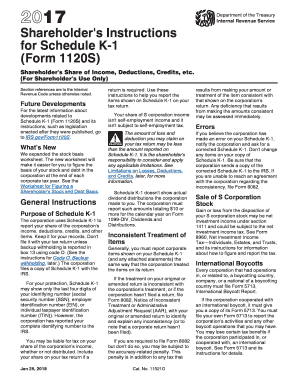
Schedule K-1 Form 1120S is the shareholder statement an S corporation uses to report each shareholder’s allocated share of income, deductions, credits, and other tax items from Form 1120-S. The corporation prepares a separate Schedule K-1 for each shareholder and uses the information to support shareholder-level tax reporting. It is not the corporation’s income-tax return itself. signNow can organize the prepared PDF, detect fillable fields, route it for review or signature, and retain the completed record with an audit trail; tax professionals remain responsible for accuracy and IRS filing requirements.
How Schedule K-1 signing works
A prepared Schedule K-1 moves through signNow as a controlled document workflow, while the corporation remains responsible for accurate tax reporting.
Upload form: Upload the prepared Schedule K-1 PDF. Check fields: Review detected fields and add missing inputs. Assign roles: Assign shareholder and preparer actions. Complete record: Collect signatures and preserve the audit trail.
Recommended Schedule K-1 workflow setup
Configure the workflow around shareholder identity, signature evidence, secure storage, and the IRS record-retention period applicable to the S corporation return.
| Setting | Recommendation |
|---|---|
| Authentication method | Email verification with SMS OTP |
| Signature type | Typed or drawn electronic signature |
| Audit trail | Capture signer, timestamp, IP, and actions |
| Document retention | Keep 3 years from filing (IRC §6501(a)) |
| Encryption | TLS 1.2/1.3 in transit and AES-256 at rest |
Inside the Schedule K-1 audit trail
The audit trail documents who interacted with the Schedule K-1 file, when actions occurred, and how the completed record can be retrieved.
Authenticate signer:
Capture timestamp:
Protect document:
Seal history:
Create certificate:
Retrieve evidence:
 Best ROI. Our customers achieve an average 7x ROI within the first six months.
 Scales with your use cases. From SMBs to mid-market, airSlate SignNow delivers results for businesses of all sizes.
 Intuitive UI and API. Sign and send documents from your apps in minutes.
Security for Schedule K-1 records
Encryption standards:
Independent assurance:
Information security:
Electronic signatures:
Protected information:
Privacy controls:



Schedule K-1 processing milestones
Use these milestones to coordinate preparation, shareholder delivery, review, and retention without confusing document completion with the corporation’s IRS filing deadline.
Document preparation
Delivery to shareholders
Shareholder review
Completion and archival
Schedule K-1 retention schedule
Retention should match the underlying S corporation tax records and the facts that determine the IRS assessment period under IRC §6501(a).
Three years after filing
Six years after filing
Indefinite for fraud
State periods may exceed
Keep record package together
Schedule K-1 preparation challenges
Shareholder names, addresses, ownership percentages, or tax allocations may be entered incorrectly before the Schedule K-1 is sent. A single template can be misused when shareholders have different ownership, allocation, distribution, or tax-item details. Email delivery without access controls can expose taxpayer identification data and other sensitive shareholder information. A missing completion certificate or audit trail can make it harder to document delivery and signature history.
Risks of incomplete Schedule K-1 handling
Incorrect allocations
Missing copies
Insufficient records
Delivery disputes
Schedule K-1 troubleshooting questions
These answers separate signNow workflow questions from the corporation’s independent IRS reporting and recordkeeping responsibilities.
The Business plan includes templates and audit trails for preparing and routing Schedule K-1 documents. Business Premium adds bulk send when many shareholder copies require the same workflow. Review each populated form before sending.
Use signNow’s detected fields as a starting point, then verify shareholder names, addresses, ownership percentages, and allocated amounts manually. Field detection does not validate the tax calculations or IRS reporting accuracy.
signNow supports ESIGN and UETA requirements, including electronic records and signature evidence. The corporation must still satisfy IRS filing, delivery, and tax-record obligations; platform compliance does not replace tax review.
The audit trail records signer activity, timestamps, IP information, and document actions. Export it with the completed Schedule K-1 so the delivery and signature history remains available for review.
A signed Schedule K-1 does not correct an incorrect allocation. Compare shareholder capital, ownership, income, deduction, credit, and distribution data against the S corporation return before requesting signatures.
Consumer-facing electronic records may require an ESIGN disclosure covering paper copies, electronic access, and withdrawal of consent under 15 U.S.C. §7001(c). Establish that process before sending records to individual shareholders.
Key performance indicators that demonstrate SignNow's proven track record.
BE READY TO GET MORE
Get this form now!

If you believe that this page should be taken down, please follow our DMCA take-down process.